Bryston - Bryston Operating Sound System, Manic Moose
Primary developer of Bryston’s embedded audio software platform for playback, browser control, library management, streaming, metadata enrichment, firmware updates, and remote support.
Overview
Manic Moose was Bryston’s embedded digital audio software platform for network music playback, browser-based device control, music library management, streaming services, firmware updates, and remote support.
Originally developed for the Bryston BDP Digital Player family, Manic Moose later expanded into other Bryston streaming products including the BDP-π, BDA-3.14, and BR-20. It became the shared software foundation for multiple generations of Bryston digital audio products.
My role was as the primary developer and long-term maintainer of the platform. The work included embedded Linux system design, audio playback integration, web application development, music library indexing, online metadata services, firmware update workflows, product-specific hardware integration, and customer/service support tooling.
Manic Moose was not simply a control interface. It was the software environment that connected the product hardware, audio playback engine, user interface, music library, streaming services, firmware system, and support tools into a complete commercial audio platform.
Product Context
Manic Moose powered or supported several Bryston digital audio products, including:
- BDP-1
- BDP-2
- BDP-3
- BDP-π / BDP-Pi
- BDA-3.14
- BR-20
The platform began with the BDP series, where it provided the control and playback system for dedicated digital music transports. Over time, it expanded beyond the BDP product line and became the embedded streaming and library-management platform for integrated DAC and preamplifier products.
This made Manic Moose a reusable product-line platform rather than one-off firmware for a single device.
Core Architecture
Manic Moose was built around a dedicated embedded Linux environment tailored for audio playback. The system combined low-level device configuration, playback services, storage management, network access, web-based control, and product-specific integration.
The audio playback system was built around MPD, with additional Bryston-specific logic for device discovery, output configuration, library management, front-panel behavior, streaming integration, and system control.
The platform had to support different hardware generations and processor architectures, from the original BDP-1 and later x86-based BDP products to Raspberry Pi-class hardware in the BDP-π and integrated streaming products such as the BDA-3.14 and BR-20.
Browser-Based Control
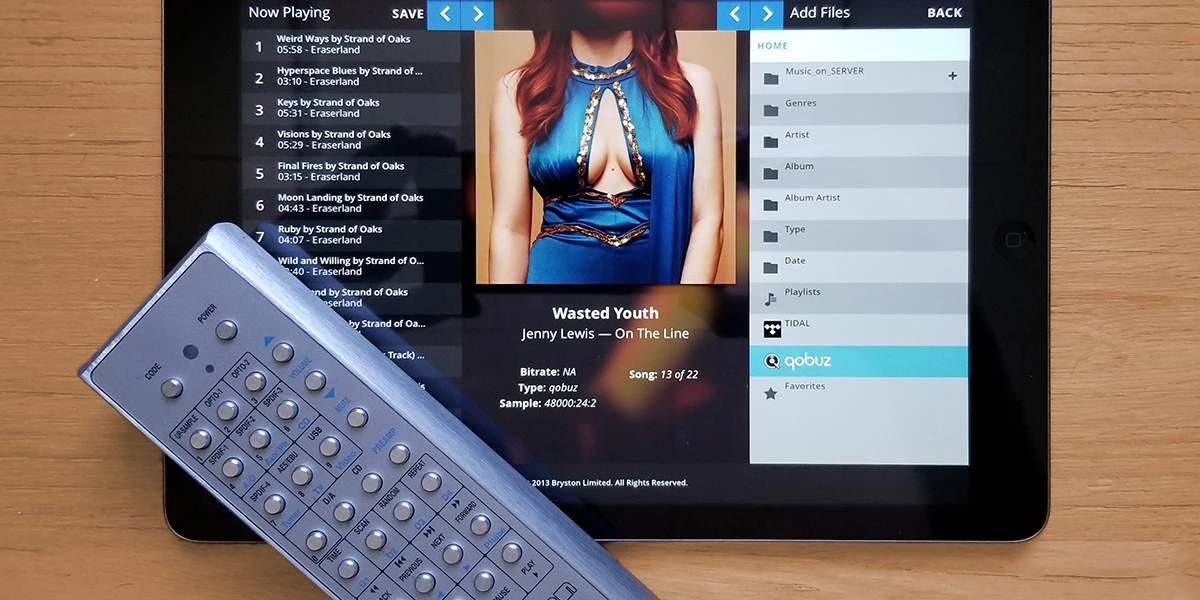
A major feature of Manic Moose was its browser-based user interface. Rather than requiring a dedicated desktop or mobile app, the products could be controlled from a web browser on a phone, tablet, laptop, or desktop computer.
The web interface provided access to:
- Music playback
- Now Playing queue
- Local and network music libraries
- Artist, album, and song browsing
- Playback device selection
- Streaming services
- Internet radio
- NAS configuration
- USB storage
- System settings
- Firmware updates
- Service and diagnostic tools
This made the platform broadly accessible across operating systems and devices without needing to maintain separate native apps for iOS, Android, Windows, and macOS.
Music Library Management
Manic Moose provided tools for indexing and browsing customer music libraries from local USB storage and network-attached storage. It supported both folder-based browsing and metadata-based library views, allowing users to navigate music by artist, album, track, and other library structures.
The platform maintained its own database and cache systems to improve browsing performance and support richer views such as Artist View and album-art-based navigation.
As the product family evolved, the library system became increasingly important. Larger music collections required faster indexing, better caching, more reliable metadata handling, and a user interface that could make large libraries practical to browse from a web browser.
Metadata and Online Enrichment
One of the more advanced parts of Manic Moose was its online music-library enrichment system. The platform included components for associating a customer’s local music library with online music database information.
This system was used to enhance customer libraries with information such as:
- Missing or improved tag data
- Artist information
- Artist profiles
- Album descriptions
- Lyrics
- Artwork
- Related images
- Cached metadata
- Improved library associations
These features helped turn Manic Moose from a simple file browser into a richer music-library platform. The goal was to improve the user’s experience with their existing collection by making the library easier to browse, more visually complete, and more informative.
The metadata and enrichment systems also influenced later product design decisions, including the need for more internal storage space and better caching behavior in newer hardware platforms.
Streaming and Network Audio
Manic Moose supported a range of playback sources and network audio workflows depending on product generation and configuration.
These included:
- Local USB storage playback
- Network-attached storage playback
- Internet radio
- Tidal
- Qobuz
- Roon Ready operation
- DLNA / UPnP-related workflows
- AirPlay-style playback
- Squeezelite-style endpoint support
- MPD client compatibility
The platform had to balance Bryston’s focus on bit-perfect playback with the expectations of modern network audio users. It needed to support traditional local music libraries while also adapting to streaming services and network playback ecosystems.
Firmware Updates and Service Tools
Manic Moose included firmware update workflows that allowed Bryston to maintain and improve products after release. Firmware updates were used to add features, improve compatibility, fix issues, and support new hardware configurations across the product line.
The platform also included service and diagnostic features to support customers remotely. This was especially important for network audio products, where issues could involve local networks, storage devices, file formats, DAC compatibility, firmware state, or configuration problems.
Remote support tooling allowed Bryston to diagnose issues more effectively and reduce the need for products to be returned for service.
Hardware Integration
A major challenge of Manic Moose was supporting multiple hardware platforms and product configurations while keeping the user experience consistent.
The platform had to integrate with:
- Different computer platforms
- Different processor architectures
- USB audio devices
- S/PDIF and other digital outputs
- Front-panel displays
- Buttons and IR control
- Local storage
- Network storage
- Internal product-specific hardware
- Power and boot behavior
- Product-specific service requirements
This required the software to be flexible enough to support multiple product generations while still feeling like one coherent Bryston platform.
Design Challenges
Manic Moose had to solve several overlapping problems:
- Provide reliable digital audio playback
- Support large customer music libraries
- Work across phones, tablets, laptops, and desktops
- Avoid requiring native mobile apps
- Support multiple hardware generations
- Handle local USB storage and NAS libraries
- Integrate streaming services
- Support firmware updates in the field
- Provide service tools for customer support
- Maintain audio-focused design goals
- Evolve over time without abandoning older products
The platform needed to work for both technical users with large network libraries and non-technical users who simply wanted to play music through a high-end audio system.
Technical Scope
This project involved work across many areas of software and product development:
- Embedded Linux
- Audio playback systems
- MPD integration
- Web application development
- Browser-based device control
- WebSockets and dynamic UI behavior
- Music library indexing
- Metadata parsing
- Database design
- Online metadata association
- Artwork and image handling
- Lyrics and artist information import
- NAS discovery and mounting
- USB storage handling
- Streaming service integration
- Firmware update workflows
- Remote diagnostics
- Product-specific hardware integration
- Front-panel display support
- System configuration tools
- Long-term maintenance of commercial products
My Role
I was the primary developer and long-term maintainer of Manic Moose.
My work included the embedded Linux system, playback integration, browser-based interface, music library tools, metadata systems, online enrichment features, firmware update process, service tools, and product-specific hardware integration.
The platform supported multiple Bryston products over multiple generations, starting with the BDP Digital Players and later expanding into integrated streaming DAC and preamplifier products. This required maintaining compatibility with older hardware while continuing to add features for newer products.
Manic Moose is one of the strongest examples of my work because it combines software architecture, embedded systems, audio playback, web development, cloud-connected metadata services, product support, and long-term commercial maintenance.
Summary
Manic Moose was the embedded audio platform behind multiple Bryston digital audio products. It provided playback, browser-based control, music library management, streaming integration, metadata enrichment, firmware updates, and service tools.
The platform began as the software foundation for the BDP Digital Players and later expanded into other Bryston streaming products, including the BDA-3.14 and BR-20. It connected embedded Linux, MPD-based playback, web UI development, online music database services, and hardware-specific product integration into a single reusable platform.
Manic Moose was not just firmware and not just a web interface. It was a complete product-line software platform for commercial high-end digital audio products.