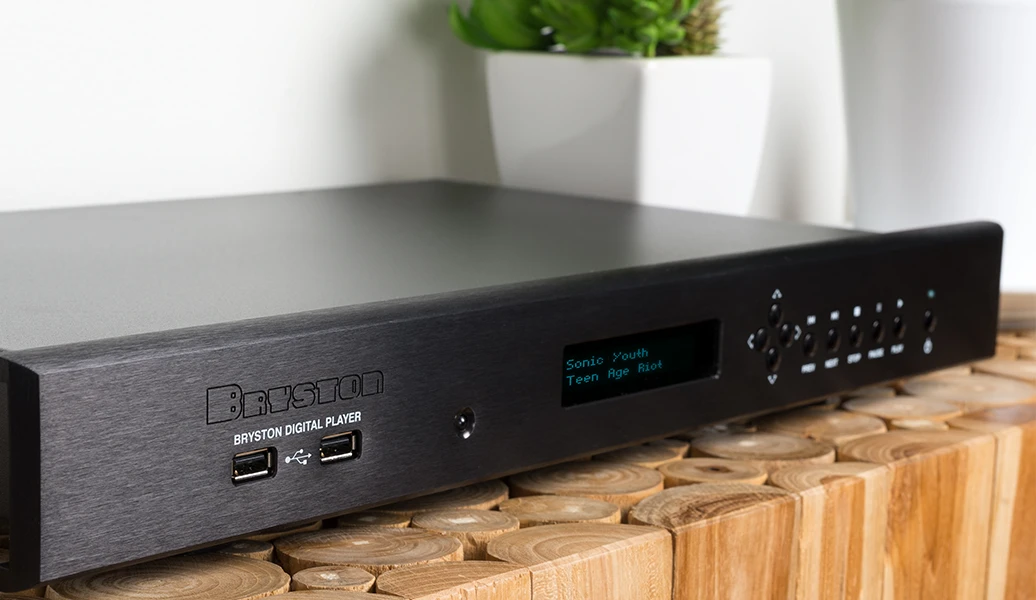
Bryston Digital Player
Professional-grade Linux-based music player software providing the backbone for Bryston's digital audio playback devices
Overview
The Bryston Digital Player series was a family of high-end digital music transports designed for bit-perfect playback from local, networked, and streaming music sources. The product line included the BDP-1, BDP-2, BDP-3, and the compact BDP-π / BDP-Pi variant.
Unlike a general-purpose computer or consumer media box, the BDP products were purpose-built audio components. They were designed to sit in a hi-fi system, connect to an external DAC, and provide a dedicated playback environment for digital music libraries. The products combined embedded Linux, browser-based control, MPD-based playback, digital audio I/O, storage support, network library access, and Bryston’s Manic Moose software platform.
My work on the product family spanned software, embedded systems, hardware design, CAD, product integration, and support. I developed the software platform used across the BDP line. For the BDP-2 and BDP-3, I also contributed to the hardware and CAD design. I also designed the hardware for the BDP-π, which adapted the BDP platform to a smaller Raspberry Pi-class embedded product.
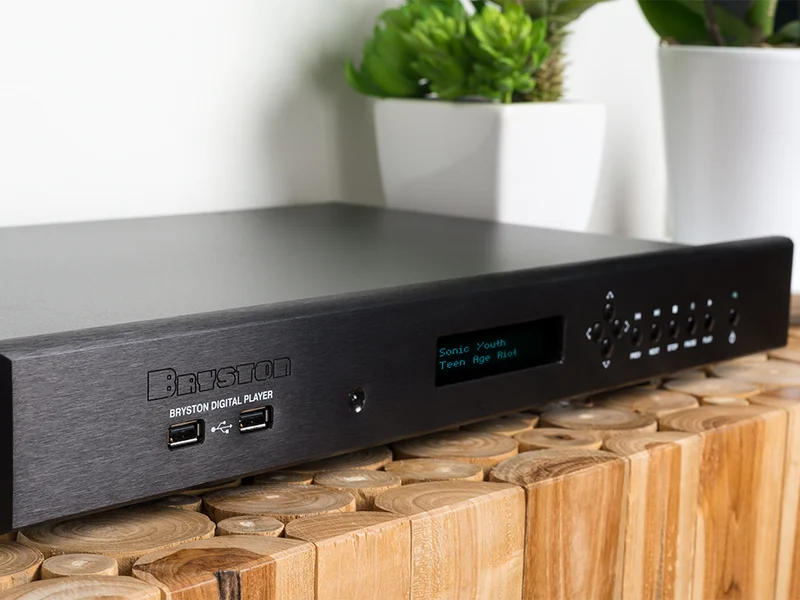
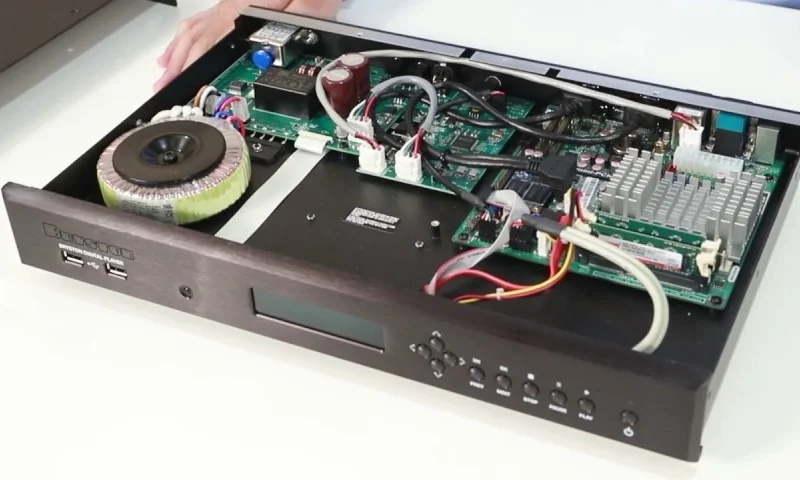
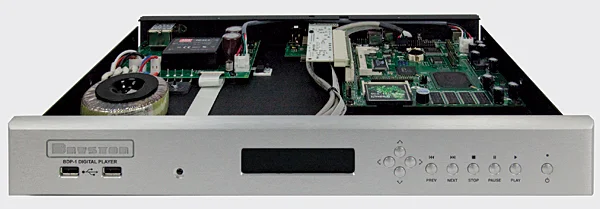
Bryston Digital Player Gallery
Product Line
BDP-1
The BDP-1 was the first product in the Digital Player line and established the core software concept for the family. It was a dedicated digital music transport built around embedded Linux, MPD-based playback, browser-based control, and integration with local and networked music libraries.
My contribution to the BDP-1 was focused on the software platform. This work became the foundation for the later BDP products and eventually evolved into Bryston’s Manic Moose software environment.
The BDP-1 is important to the project story because it was the starting point for the software architecture that carried forward into the BDP-2, BDP-3, BDP-π, and later non-BDP Bryston streaming products.
BDP-2
The BDP-2 expanded the original concept with a more capable internal computer platform, improved performance, additional storage and I/O options, and a revised chassis architecture. It was designed to support larger music libraries, faster indexing, and a more responsive user experience while retaining the dedicated audio transport approach of the original BDP-1.
For the BDP-2, my role included both software development and hardware/CAD design. This included integrating the embedded software platform with a revised hardware architecture and supporting the mechanical and electrical design constraints of a mains-powered commercial audio component.
One of the major mechanical changes introduced with the BDP-2 was a modular rear chassis design. The rear of the chassis was made replaceable so that different mainboards and I/O layouts could be supported without requiring the entire enclosure to be redesigned. This allowed the product to adapt to changes in computer hardware while preserving the main chassis design.
The BDP-2 also used an internal linear power supply. This made the product more involved than an external-adapter-powered embedded device, because the internal layout needed to account for mains-voltage safety, transformer placement, grounding, chassis bonding, wiring, fuse protection, insulation spacing, thermal behavior, and regulatory compliance.
BDP-3
The BDP-3 was a major architecture update for the Digital Player line. It used a more powerful internal platform, expanded I/O, and provided greater capability for demanding playback, library, and streaming features.
The modular chassis approach introduced with the BDP-2 carried forward into the BDP-3. Because the BDP-2 chassis had been redesigned with a replaceable rear section, the main chassis part could be reused for the BDP-3 without modification. This was an important product-design outcome because it reduced redesign effort, supported continuity in manufacturing, and allowed the internal hardware platform to evolve while preserving the core mechanical design.
The BDP-3 also provided more internal space and capability for the expanding Manic Moose software platform, including richer library features, metadata systems, cached data, and more advanced browsing and streaming functionality.
For the BDP-3, my work included software, hardware, and CAD design, along with integration of the internal platform, digital audio hardware, storage, I/O, chassis, and linear power supply.
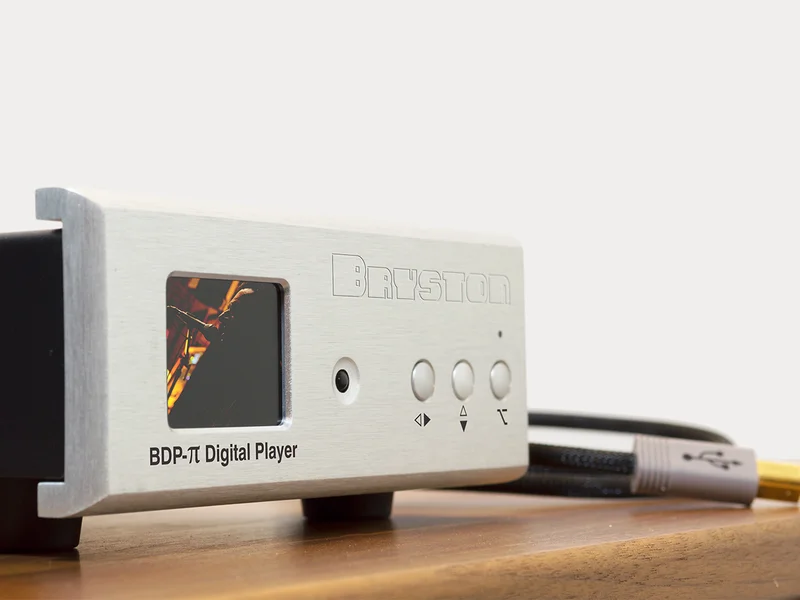
BDP-π / BDP-Pi
The BDP-π was a compact derivative of the Digital Player concept based on Raspberry Pi-class hardware. It brought the BDP/Manic Moose software experience into a smaller and lower-cost product form while preserving the core idea of a dedicated Bryston digital music player.
My work on the BDP-π included the hardware design as well as integration with the existing software platform. The product required adapting the BDP architecture to a smaller embedded hardware platform, including digital audio output, display and control integration, power regulation, mechanical constraints, and support for the Manic Moose software environment.
The BDP-π is also a useful example of design tradeoffs. In hindsight, there are aspects of the hardware approach I would revise, but the product remains an important part of the overall BDP family because it showed that the platform could scale beyond the full-size BDP-1, BDP-2, and BDP-3 products.
Manic Moose Software Platform
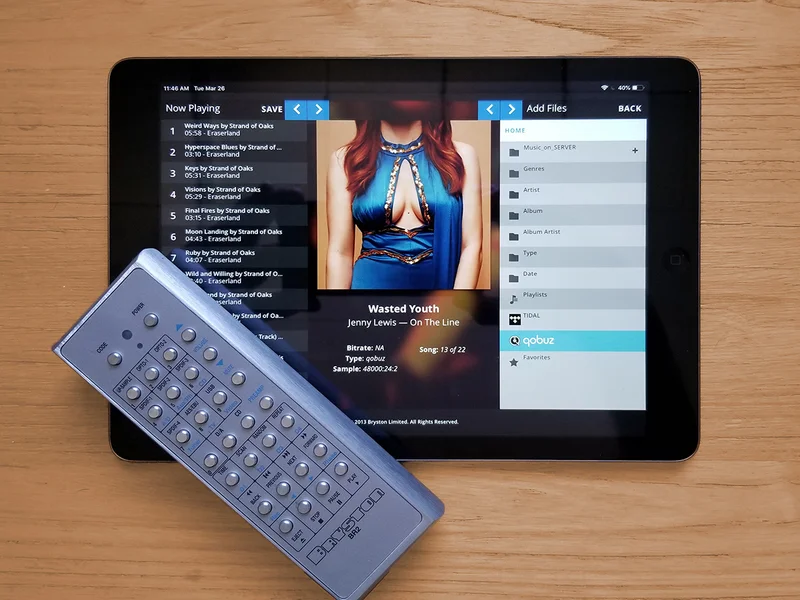
The BDP products were powered by Manic Moose, Bryston’s embedded digital audio platform. Manic Moose provided the browser-based user interface, playback control, library browsing, system settings, firmware update workflows, service tools, and product-specific integration.
The software stack was built around a dedicated Linux environment and MPD-based playback, with Bryston-specific support for audio devices, storage, network libraries, front-panel behavior, remote control, and customer support.
Over time, Manic Moose grew beyond basic playback and device control. It included online components for enhancing customer music libraries, including database association, missing tag completion, lyrics, artist information, descriptions, artwork, and related images. These features helped transform the BDP line from a basic file player into a richer music-library and streaming platform.
Manic Moose later extended beyond the BDP product family into other Bryston streaming products, including the BDA-3.14 and BR-20.
Hardware and Mechanical Design
The BDP-2, BDP-3, and BDP-π required hardware and mechanical design work beyond simply packaging a computer board inside an audio chassis. The products needed to meet the expectations of high-end audio components while also functioning as reliable embedded computer systems.
Key design considerations included:
- Internal computer platform integration
- Digital audio interface layout
- USB and storage support
- Front-panel display and control integration
- Internal cable routing
- Thermal behavior
- Chassis layout and mechanical fit
- Serviceability
- Production assembly workflow
- Long-term reliability
- Compatibility with evolving computer hardware
A key mechanical improvement introduced with the BDP-2 was the replaceable rear chassis section. This allowed the rear I/O layout to change as the internal computer platform changed, without redesigning the main enclosure. That design decision carried forward directly into the BDP-3, where the main chassis part was reused without modification.
This kind of mechanical reuse is an important part of commercial product design. It reduced risk, simplified manufacturing continuity, and made it easier to evolve the product architecture across generations.
Linear Power Supply and Safety Compliance
A major hardware consideration for the BDP-2 and BDP-3 was the use of internal linear power supplies. This made the products more involved than a typical low-voltage embedded device or external-adapter-powered streamer.
The internal power supply design required attention to mains-voltage safety, grounding, chassis bonding, fuse protection, transformer placement, insulation spacing, wiring practices, thermal behavior, and mechanical protection. These constraints affected both the electrical design and the CAD/mechanical layout.
The linear power supply was not only an audio-performance feature. It also turned the BDP-2 and BDP-3 into safety-sensitive, mains-powered commercial products that required careful integration and compliance-aware design.
Technical Scope
This project involved work across multiple disciplines:
- Embedded Linux system design
- Audio playback software
- MPD integration
- Browser-based device control
- Web UI development
- Network library discovery and indexing
- Metadata and music database systems
- Online music-library enrichment
- Firmware update workflows
- Remote service and diagnostics
- Hardware architecture
- Digital audio interface integration
- Raspberry Pi-class embedded hardware design
- CAD and mechanical integration
- Modular chassis design
- Linear power supply integration
- Safety-compliance-aware product design
- Production and customer support tooling
My Role
My role on the Bryston Digital Player family spanned software, embedded systems, hardware design, CAD, product integration, and support.
For the BDP-1, my work focused on the software platform that powered the product. For the BDP-2 and BDP-3, my role expanded to include hardware and CAD design, including internal system layout, chassis changes, power supply integration, and manufacturing considerations. I also designed the hardware for the BDP-π, which adapted the BDP platform to a smaller Raspberry Pi-class embedded product.
A key mechanical design change introduced with the BDP-2 was a replaceable rear chassis section that allowed the product to support different mainboards and I/O layouts. This modular approach carried forward to the BDP-3, where the main chassis part was reused without modification.
Across the product line, the work combined embedded Linux, digital audio playback, browser-based control, music library management, hardware platform integration, safety-compliant linear power supply design, compact embedded hardware design, and commercial product development.
Summary
The Bryston Digital Players were dedicated high-end digital audio transports built around embedded Linux, bit-perfect playback, browser-based control, and carefully integrated audio hardware. Across the BDP-1, BDP-2, BDP-3, and BDP-π, the product family evolved from a focused file playback device into a flexible network audio platform.
The project combined software architecture, hardware design, CAD, audio integration, safety-conscious power supply design, modular chassis design, and long-term product support. It also became the foundation for Manic Moose, a reusable embedded audio platform that later powered additional Bryston streaming products.