FM Radio - Solderless DIY Kit
A DIY FM radio kit that requires no soldering, perfect for makers.
Solderless FM Radio Kit
Overview
The Solderless FM Radio Kit is a maker-focused electronics platform designed to let users build custom 3D-printable radios without needing to design, solder, or debug the electronics themselves.
The project is built around a complete radio electronics assembly that can be installed into a user-designed enclosure. The goal is to separate the hard-to-approach electronics portion of the project from the creative mechanical design side, allowing makers to focus on the shape, style, and physical design of the radio.
I designed the electronics, PCB, and a reference 3D-printed enclosure to demonstrate the platform. The reference enclosure is intended for users who own a 3D printer but may not yet have the CAD experience to design their own case. More advanced users can design their own enclosures around the same electronics kit, either for personal projects or potentially for resale.
The long-term goal is to sell the complete electronics kit through an online storefront, giving makers a ready-made hardware base for building custom FM radios.
FM Radio Kit Gallery
Project Goals
The main goal of the project is to create a small, approachable hardware kit that bridges 3D printing and electronics.
Rather than selling only a finished radio design, the kit is intended to act as a reusable electronics platform. Makers can buy the electronics, print the reference enclosure, modify the design, or create a completely new radio body around the same internal hardware.
This makes the project useful for several types of users:
- Beginners who want a complete working radio project
- 3D printing hobbyists who want electronics to design around
- Makers who want to customize the enclosure, controls, and visual style
- Small sellers who may want to create their own enclosure designs around a common electronics kit
Electronics Design
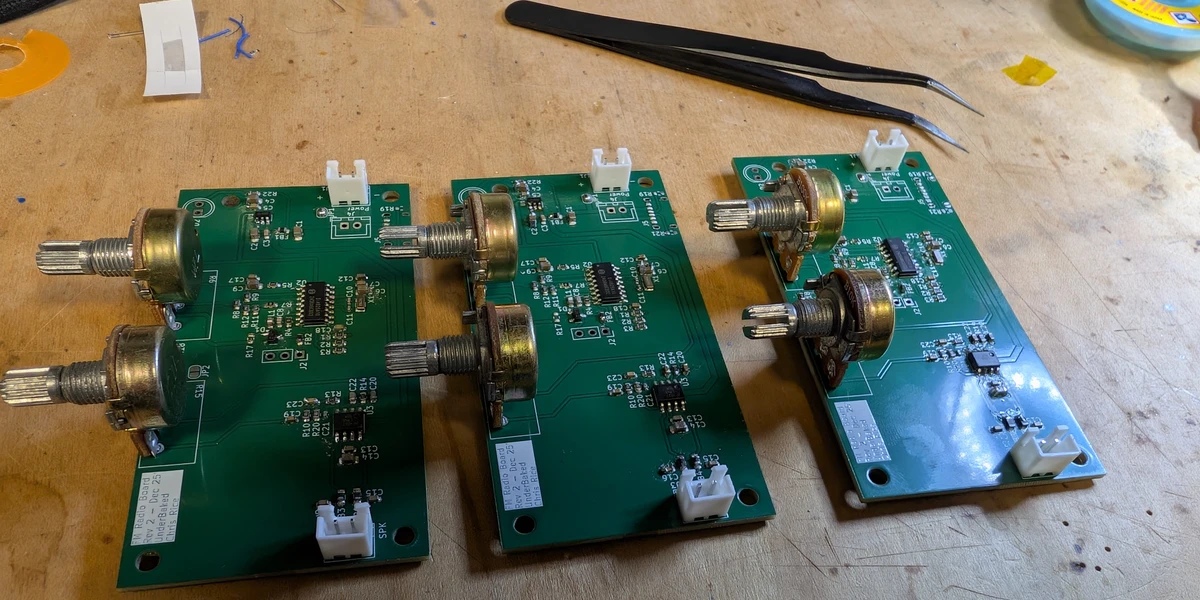
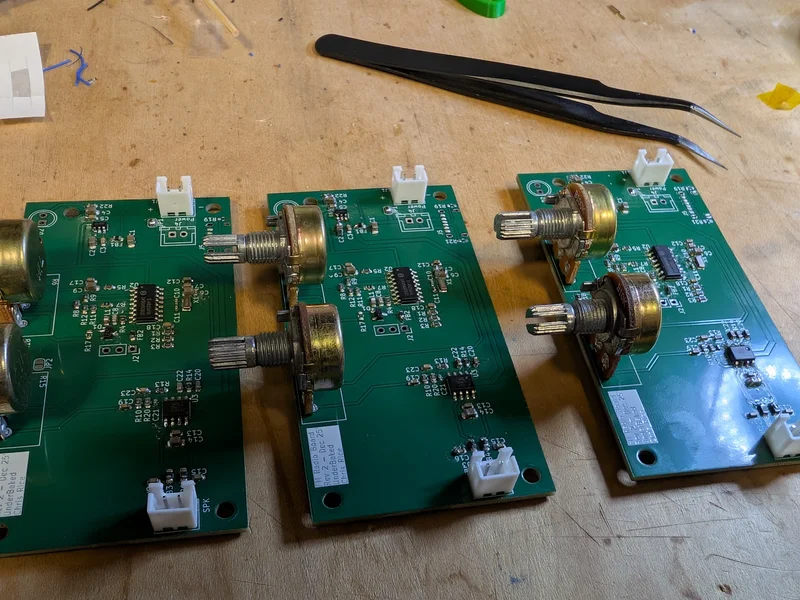
The electronics are designed as a self-contained FM radio platform. The board includes the functional blocks needed to turn the kit into a complete working radio, including power input, voltage regulation, FM reception, audio amplification, speaker output, controls, and power indication.
The design uses a regulated low-voltage supply for the receiver circuitry and includes a small audio amplifier stage to drive the internal speaker. The front-panel controls provide power, tuning, and volume adjustment, while an indicator LED provides simple user feedback.
The intent is not to make users assemble a radio from loose modules and jumper wires. The electronics are consolidated into a kit-friendly form so the user can install the hardware into an enclosure and focus on the physical design of the finished product.
Mechanical Design
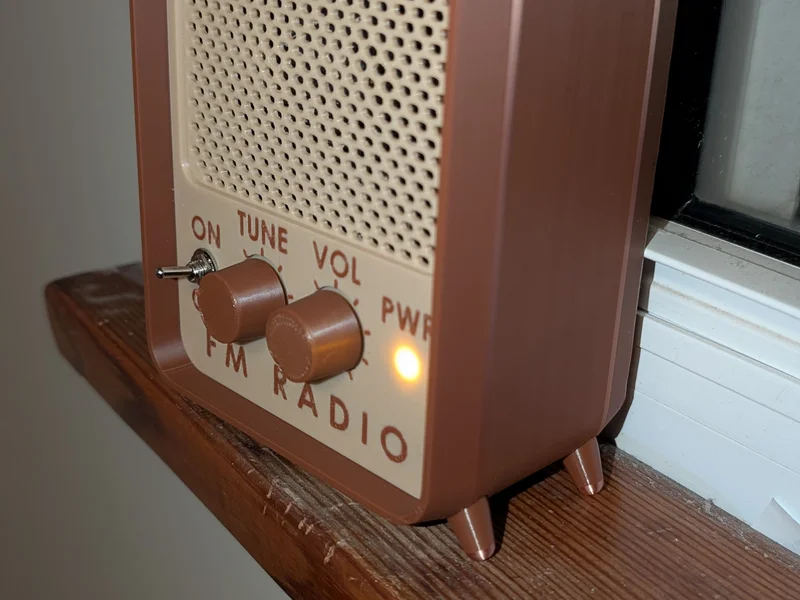
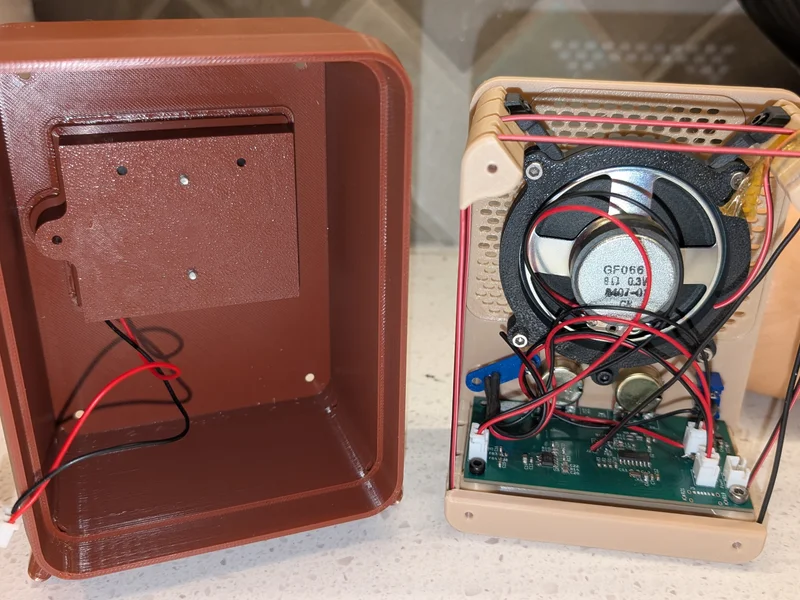
I designed a compact retro-inspired reference enclosure for the kit. The enclosure includes an integrated speaker grille, front-panel control layout, LED opening, internal PCB mounting, speaker mounting, rear cover, and small angled feet.
The enclosure was designed to make the radio look and feel like a finished object rather than a bare electronics project. The front face uses a contrasting panel for the speaker grille and controls, while the outer shell gives the radio a rounded, vintage appliance-style appearance.
The reference enclosure also acts as a practical starting point for users. Someone with a 3D printer can build the kit even if they do not yet have the experience to design their own enclosure from scratch.
Platform Approach
The most important part of the project is the platform concept. The electronics are meant to be fixed and reliable, while the enclosure is meant to be open-ended and customizable.
This allows the same kit to support many different finished designs. One user could build the provided retro enclosure, another could design a modern desktop radio, and another could build something themed around a character, vehicle, appliance, or piece of decor.
By keeping the electronics consistent, the project lowers the barrier for makers who are stronger in mechanical design than electronics. It also creates the possibility of a small ecosystem where users design and share, or potentially sell, their own compatible 3D-printable radio enclosures.
My Role
I designed the project as a complete hardware product concept, including the electronics platform, PCB, enclosure, control layout, and reference build.
My work included:
- Defining the kit concept and target user
- Designing the FM radio electronics platform
- Creating the PCB schematic and board layout
- Designing the 3D-printable reference enclosure
- Integrating the speaker, controls, LED, PCB, and rear cover
- Designing the product around future kit assembly and online sales
- Considering how other makers could design compatible enclosures around the same electronics
Skills Demonstrated
This project demonstrates a combination of electronics design, mechanical design, product thinking, and maker-focused design-for-assembly.
Key skills demonstrated include:
- Custom PCB design
- Analog audio circuit integration
- FM receiver integration
- Power regulation and distribution
- Speaker and amplifier integration
- Front-panel control layout
- 3D-printable enclosure design
- Design for assembly
- Design for customization
- Maker product development
- Early-stage product commercialization planning
Current Status
A working prototype has been assembled using the custom electronics and reference 3D-printed enclosure. The next goal is to prepare the project for small-scale kit sales through an online storefront.
Future work includes refining the kit package, improving documentation, finalizing the reference enclosure files, preparing assembly instructions, and setting up a storefront for selling complete electronics kits.
Summary
The Solderless FM Radio Kit is more than a standalone radio project. It is a hardware platform intended to help makers create their own custom 3D-printable radios.
By providing the electronics as a ready-made kit, the project lets users focus on enclosure design, styling, and customization. The reference enclosure demonstrates one possible finished design, while the broader platform is intended to support many different radio designs built around the same electronics core.